Introducing ETOM – European Triennial of Modernism
Diverse Modernism | Modern Diversity
The „European Triennial of Modernism (ETOM)“ is a co-creation platform and an official Lab project of the „New European Bauhaus“ (NEB) on trans-European Modernism and its progressive heritage. It is based on an international network involving more than 40 partners from 15 countries, focusing on Central Europe. Target and starting point for ETOM’s circular ecosystem and the work of the „ETOM NEB Lab“ is the recurring triennial ETOM festival. ETOM builds on the successful implementation of the „Triennale der Moderne“ (TDM), a supra-regional festival in Berlin, Dessau and Weimar. The collaboration of the „ETOM NEB Lab“ connects different actors from various backgrounds to evolve and realize transnational cooperation, best-practice, research, and capacity building.

The ETOM-NEB-Lab acts a co-creation lab on trans-European Modernism to evolve and realise trans-national cooperation, best-practice, research, and capacity building. The Lab builds for a circular ecosystem on a three-year rhythm to bear and sustain plural transdisciplinary collaboration projects and to establish a decentralised and recurring European Triennial of Modernism (ETOM) festival.
Overview of Projects
From it is initial announcement within the Triennale der Moderne 2022 in Berlin, the following events and milestone conferences have been achieved / are planned in an annual rhythm.
ETOM Milestone 2026
21–23 Oct 2026 in Trenčin/Slovakia:
ETOM Milestone Conference „Modernism Revisited“
The program of the ETOM Milestone Conference 2026 entitled „Modernism Revisited“ will be part of the program of the European Capital of Culture Trenčin 2026. The conference invites scholars, architects, planners, educators, researchers, and policymakers to reflect on how modern architecture, landscape, and planning visions can be reinterpreted and reactivated in the twenty-first century.
ETOM Pilot 2025
28 + 29 Nov 2025 in Berlin:
International conference for the „ETOM2025pilot-Festival“
This years first „ETOM2025pilot Festival & Conference“ is the pilot edition for the „ETOM – European Triennial of Modernism“, a decentralized triennial festival on the diverse heritage and future of Modernism. The topic „MODERNISM#progressiveheritage“ serves as a starting point for a discussion about different approaches towards Modernism.
ETOM Milestone 2024
14/15 Oct 2024 in Halle (Saale):
International Conference „Modern Housing Postwar – Cities of Tomorrow?“
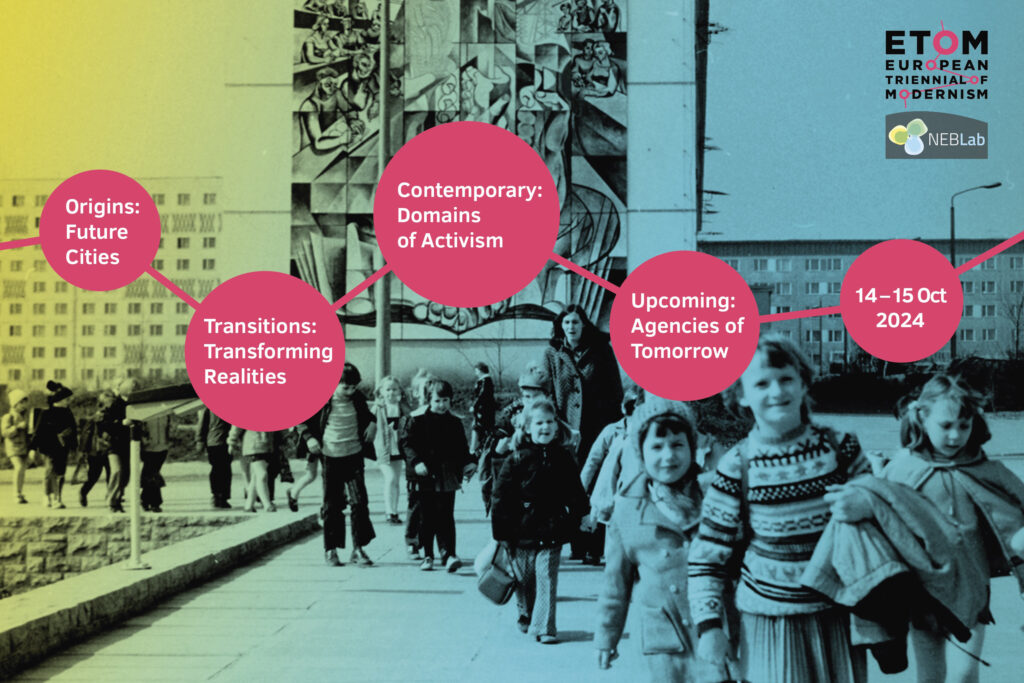
The European Triennial of Modernism (ETOM) NEB milestone project is looking at large housing estates in Central Europe erected after World War II. The conference located nearby the city of Halle-Neustadt takes a comperative look and is carried out as an “ETOM NEB-Lab” conference, within the framework of the “New European Bauhaus”, in the context of Central Europe, with a special focus on the exchange between Germany and Poland.
ETOM Milestone 2024
16–18 Nov 2023 in Berlin:
International Conference „Convergences and Divergences“

The international conference with partners from different parts of Europe critically rethinks and analyzes the history of European modern architecture with reference to Central and Eastern Europe. It has been organized by the Pilecki-Institute in cooperation with the initiative for a “European Triennial of Modernism (ETOM)“.
ETOM Special 2022
Oct 2022 – June 2022:
Exhibition Series „Modernism in Ukraine“
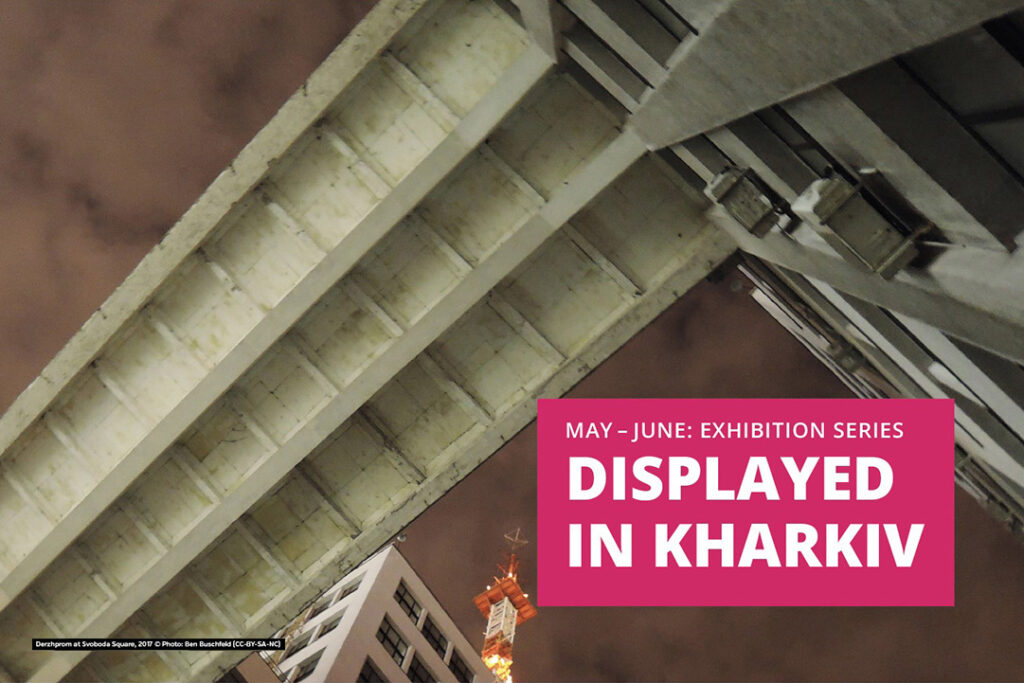
The Special Focus – on the Opening event and on the Triennial of Modernism 2022 focuses on the roots and heritage of Modernism in Ukraine, for a trans-European consideration of the historical references and protagonists as well as the question of the current state in the face of the war of aggression on Ukraine. Parts of the exhibition are travelling …
Announcement 2022
30 Sep 2022 in Berlin:
Triennale der Moderne, Opening Event
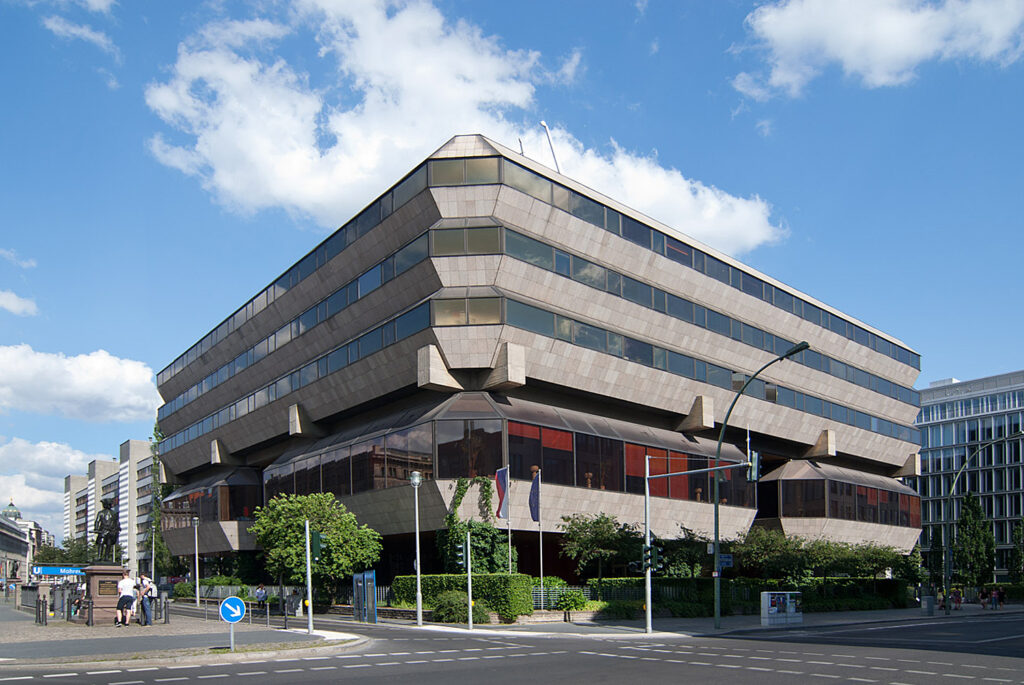
The initial announcement of the ETOM network and initiative was during the opening event at the Triennale der Moderne in Berlin. Right before the main public event started, some of the later partners gathered for the first time. As part of the official program an European network pilot was announced
Announcement 2024
ETOM proudly presents
The ETOM New European Bauhaus Lab
Marking the start of 2024, as part of the activities within New European Bauhaus (NEB), a new Lab on trans-European Modernism for the „European Triennial of Modernism (ETOM)“ initiative was launched and announced by the European Union as ETOM NEB Lab. The Lab was created by the ETOM initiative and NEB partners BHROX bauhaus reuse / zukunftsgeraeusche together with The Hungarian Contemporary Architecture Centre (KEK) on behalf of the consortium and coordination board with ICOMOS international, National Gallery Prague (NGP), Slovak Design Center (SDC) and Estonian Academy of Arts (EKA).
The ETOM-NEB-Lab will be a co-creation lab on trans-European Modernism to evolve and realise trans-national cooperation, best-practice, research, and capacity building. The Lab builds for a circular ecosystem on a three-year rhythm to bear and sustain plural transdisciplinary collaboration projects and to establish a decentralised and recurring European Triennial of Modernism (ETOM) festival.
The project partnership includes already around 10 official NEB-community members and 30 more partners from 14 countries, on a heterogeneous and cross-sectoral background, with an initial emphasis on Central Europe.
The project’s motto „Diverse Modernism | Modern Diversity“ reflects an inclusive approach, addressing the trans-European heritage, global and future perspectives of Modernism and the variety of protagonists, and today involved actors, backgrounds and agencies –

Part of the

Back History
How the ETOM-initiative has developed
ETOM was created “bottom-up” during the pandemic in 2021, and has already brought together 38 partners from 14 countries and of a heterogeneous and cross-sectoral background, including 9 official partners from the New European Bauhaus (NEB) community.
The initiative was launched by Ben Buschfeld and Robert Huber, the Berlin curators of the Triennale der Moderne (TDM) together with new partners from across Central Europe, originating from an emerging network based on partners from the 2019 trans-national “re:bauhaus” festival, as well as from a strategic partnership with DOCOMOMO International, ICOMOS plus the emerging European NEB community.
Following the motto “Diverse Modernism | Modern Diversity”, the ETOM initiative addresses both the heritage of and the future perspectives on Modernism in terms of built heritage and the history of modern ideas, with a particular focus on the sustainability and resilience of such modern values associetal emancipation, social equality, and democratic participation.
ETOM incorporates a circular ecosystem, based on a recurring three-year period, which includes continuous cross-sectoral capacity building and transdisciplinary co-creation culminating with the triennial ETOM festival, which serves not only for public presentation, but also as a target and starting point for the process. In a triangle collaboration between ETOM and the international, widely connected organizations DOCOMOMO and ICOMOS, a strategic initiative “Triangle for Modernism” was launched.
From the very beginning, the ETOM initiative drew special attention to Central and Eastern Europe, its significance and major role in ensuring European unity and cultural resilience, as well as in overcoming a persisting, but outdated East–West divide. The war of aggression against Ukraine clearly shows the importance of Central Europe for European coherence, which should rely, among others, on cultural collaboration and shared modern values.
Initial Presentation
Introducing an European Cooperation Project
On the first day of the opening event of the „Triennale der Moderne“ (Triennial of Modernism) 2022 in Berlin, actors from selected future network cities presented the developments and local networks of modernism and their dedicated work.
The European cooperation project launched in 2021 is intended to pave the way for a „European Triennial of Modernism“ (ETOM). The initiative comprises 38 partners from 14 countries, with a focus on Central Europe.
The history of modernism is based on a diversity of examples, sources, protagonists, and – even more so today – on the diversity of actors who are committed to the architectural appreciation and sustainable perspective of modernism – a progressive cultural heritage whose avant-garde architecture, art, urban and social developments are once again highly topical for the future of Europe and the resilience of common values.
The stakeholders face similar or comparable challenges and potential. With trans-European cooperation, they are seizing the opportunity to unite goals and jointly sensitize and address the public.
Especially today, in the face of war and attempts at division and in awareness of the historical ruptures, the European architectural development of modernity and a lively transnational exchange are proving to be a model for political cohesion and cultural cooperation in Central Europe.
On the first day of the kick-off-event, actors from selected future network cities officially met for the first time and presented the developments and local networks of modernism and their committed work.

photos: Ben Buschfeld
Stay tuned via Social Media

Overview of Partners
Initiated by
• BHROX bauhaus reuse / zukunftsgeraeusche GbR (zkg), Robert K. Huber, Berlin
• buschfeld.com / Ben Buschfeld (BB), Berlin
Development supported by
• Landesdenkmalamt Berlin (LDA)
• Bundesministerium für Wohnen, Stadtentwicklung und Bauwesen (BMWSB)
German Partners
• Landesdenkmalamt Berlin (LDA)
• Architektenkammer Berlin (AKB)
• Kunstbibliothek Berlin (KUBI)
• since 2025: Tschechisches Zentrum Berlin (TZB)
Members of the Coordination Group
• BHROX bauhaus reuse / zukunftsgeraeusche GbR (zkg), Berlin
• buschfeld.com, Berlin
• The Hungarian Contemporary Architecture Centre (KÉK), Budapest
• ICOMOS International Secretariat, Paris
• Estonian Academy of Arts – Institute of Art History and Visual Culture (EAA–EKA), Tallinn
• Contineo 2020 (CONTINEO), Skopje
European Partners
(by nation in alphabetical order)
Czech Republic
• National Gallery in Prague (NGP), Prague
• Forum for Architecture and Media (4 AM), Brno
• Prague 7 District Municipality (UMC7)
Estonia
• Estonian Academy of Arts – Institute of
Art History and Visual Culture (EAA–EKA), Tallinn
• Estonian Museum of Architecture (EMA), Tallinn
• Tallinna linn (COT), Tallinn City
France
• ICOMOS International Secretariat, Paris
Hungary
• Hungarian Museum of Architecture
(MEM-MDK), Budapest
• The Hungarian Contemporary
Architecture Centre (KÉK), Budapest
• Budapest 13th District – city municipality (B13D)
Latvia
• Museum of Decorative
Arts and Design (LNMM), Riga
• Latvian Design Centre (FOLD), Riga
• Latvian Ministry of Culture (LMOC)
Lithuania
• Kaunas 2022 (K2022),
Kaunas European Capital of Culture
• Nematerialaus Turto Fondas (NTF)
• Kaunas City Municipal Administration (KCMA)
• Architects Association of Lithuania, Vilnius (LAS)
Netherlands
• DOCOMOMO international
North Macedonia
• Contineo 2020 (CONTINEO), Skopje
• University American College Skopje – Privatna Ustanova – Department of Architecture (UACS)
Poland
• National Institute of Architecture and
Urban Planning (NIAiU), Warsaw
• Institut of Architecture Foundation (FIA), Cracow
• International Cultural Centre (ICC), Cracow
• Gmina Miejska Kraków – Urząd Miasta Krakowa (CCK), Cracow
Romania
• Asociația Română pentru Cultură,
Educație și Normalitate (ARCEN), Bucharest
• SG Studio – zeppelin magazine (SGS-ZEP), Bucharest
• Second District Hall of Bucharest (SDHB)
Serbia
• Belgrade International Architecture Week (ABA-BINA), Belgrade
• ZAVOD – Zavod za zastitu spomenika kulture grada Beograda (Cultural Heritage Preservation Institute of Belgrade)
• Gradska opstina Novi Beograd, City Municipality (MNB), Belgrade
Slovakia
• Slovak Design Center (SDC), Bratislava
Ukraine
• Lviv Centre for Urban History, Lwiw (LCUH), Lviv
• Urban Forms Center (UFC), Kharkiv
Part of the